Optimize your layer poultry farm operations with an ERP system. This article guides you through the concepts, technical details, code examples, and best practices for a successful ERP implementation, improving efficiency and profitability.
In the increasingly competitive layer chicken farming industry, profit margins are often determined by operational efficiency and the ability to make data-driven decisions. Many farms still rely on manual recording or separate systems that are not integrated. This results in data silos, difficulty tracking flock performance in real-time, inefficiencies in feed, medication, and labor management, as well as a high risk of undetected disease spread. Imagine a scenario where you have to manually count feed stock in the warehouse, then match it against the daily needs of thousands of chickens, and then compare it with egg production recorded in a daily logbook. This process is error-prone, time-consuming, and hinders rapid response to market fluctuations or chicken health issues. Enterprise Resource Planning (ERP) systems come as a comprehensive solution to address these challenges. This article will guide you in depth through the implementation of ERP specifically for modern layer chicken farms, from basic concepts, technical details, real code examples, to best practices to ensure the success of your project.
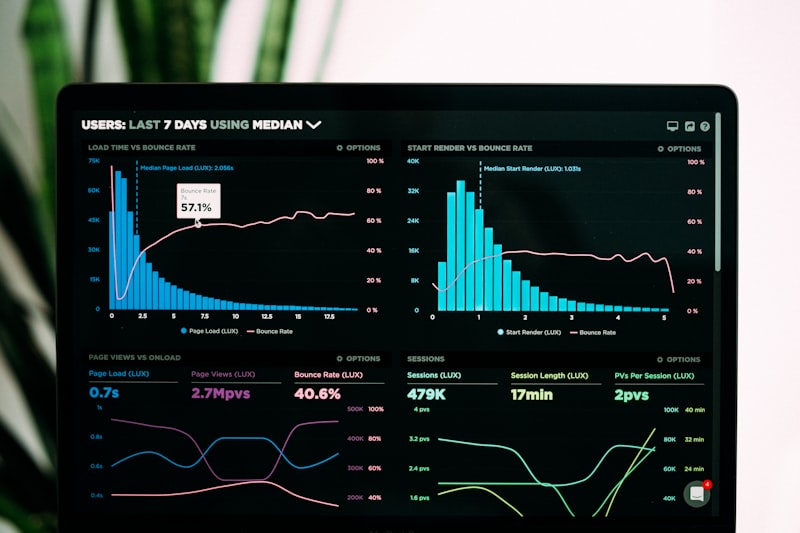
ERP for layer chicken farming is an integrated software system designed to manage all aspects of the farm business operations. This includes essential modules such as flock management, egg production, feed management, medication and vitamin inventory, finance, human resources, as well as sales and distribution. Its main goal is to unify all data and processes into one centralized platform, eliminating information silos, and providing full visibility into the entire farm value chain. For example, a farm with 50,000 layer chickens can generate enormous daily data: feed consumption, egg production per house, mortality rate, vaccination records, as well as house temperature and humidity. Without ERP, consolidating and analyzing this data effectively is a very challenging and time-consuming task.
The concrete benefits of ERP implementation are significant. First, increased operational efficiency. With automated recording and reporting, the time previously spent on administrative tasks can be redirected to more strategic activities. For example, the system can automatically calculate the daily FCR (Feed Conversion Ratio) per house, allowing managers to immediately identify flocks with below-standard performance and take corrective action. Studies show that ERP implementation in the agribusiness sector can reduce operational costs by up to 15-20% through optimizing resource use and reducing waste. Second, better decision-making. Accurate and real-time data enables managers to make informed decisions, from optimal feed planning, flock health strategies, to setting competitive egg selling prices.
Key modules in layer farm ERP include: Flock Management, which tracks detailed information for each flock (entry date, strain, age, population count, vaccination history, mortality); Egg Production Management, recording daily production, egg grading, and percentage of broken eggs; Feed Management, managing stock, formulation, daily consumption, and feed costs; Health Management, recording vaccination schedules, medication administration, and disease diagnosis; Inventory, tracking stock of feed, medication, vitamins, and other supplies; Finance, managing income, expenses, and profit and loss statements; as well as HRM for employee management. Each of these modules interacts with one another; for example, feed consumption data from the feed module will affect the FCR calculation in the flock module, which will then be analyzed together with egg production data to evaluate profitability.
As an illustration, imagine an ERP system integrated with sensors in the house. When the house temperature exceeds the optimal threshold (for example, 28°C), the system automatically sends a notification to the operations manager and records the event. The manager can then access historical temperature data, compare it with egg production trends, and identify the impact of heat on flock performance. Furthermore, the system can predict feed needs based on growth and egg production projections, ensuring feed stock is always available and minimizing the risk of shortages or excess stock. This holistic approach not only improves efficiency but also mitigates risk, which is crucial in the farming business.
Building or implementing an ERP system for layer chicken farming requires choosing the right technology to ensure scalability, reliability, and ease of maintenance. For the backend, a combination of Laravel 11.x (with PHP 8.2+) and Node.js 20 LTS (using the Express.js 4.18 framework) offers excellent flexibility and performance. Laravel is suitable for modules that require complex data management and rich business logic, such as finance and inventory management. Meanwhile, Node.js with Express.js is ideal for real-time APIs that interact with IoT sensors or mobile applications, for example for recording daily egg production directly from the house. The use of an API gateway such as Kong API Gateway 3.x or Nginx can help manage and secure different microservices.
On the database side, PostgreSQL 16 is a highly recommended choice due to its reliability, JSONB support for semi-structured data (for example, sensor metadata), and strong scalability features. For caching and real-time data processing needs, Redis 7 can be used effectively, for example to store temporary data from sensors or user sessions. The database architecture must be carefully designed, considering data normalization for financial transactions and partial denormalization for fast analytical reports. For the frontend, React 18.x (with the Next.js 14.x framework) or Vue 3.x (with Nuxt 3.x) will provide a responsive and modern user experience. This choice enables the development of complex web applications with high performance, suitable for manager dashboards, data entry interfaces, and interactive reports.
Integration is key in ERP. The system must be able to interact with various devices and external systems. For IoT sensors (temperature, humidity, feed weight), the MQTT 5.0 protocol is an industry-standard choice that is lightweight and efficient. Data from sensors can be sent to a message broker such as Mosquitto or Kafka, then processed by a Node.js backend service. For integration with other systems (for example, external accounting systems or online egg sales platforms), RESTful API is the standard approach. Make sure the API is well documented using the OpenAPI Specification (Swagger) to facilitate development and maintenance. A specific example of use is integration with automatic scales for feed or eggs, where weight data is sent in real-time to the ERP system.
Another important aspect is infrastructure and deployment. Using Docker 24.x for containerization of each service (backend, frontend, database) will ensure consistency between development and production environments. Container orchestration with Kubernetes 1.28.x is highly recommended for scalability, high availability, and efficient resource management. This allows farms to easily add capacity as the business grows, or restore services quickly in the event of a failure. For source code management and CI/CD (Continuous Integration/Continuous Deployment), GitLab CI/CD or GitHub Actions are solid choices. With a CI/CD workflow, every code change will be automatically tested and deployed to the production environment with minimal manual intervention, reducing the risk of errors and accelerating the development cycle.
Cybersecurity must also be a top priority. Implement token-based authentication (for example, JWT) for the API, use HTTPS/TLS 1.3 for all communications, and ensure the database is encrypted (at rest and in transit). Conduct security audits regularly, and comply with relevant data security standards. For example, ensure that only authorized user roles can access sensitive data such as chicken health records or financial information. The use of a web application firewall (WAF) such as Cloudflare or AWS WAF can add a layer of protection against common attacks such as SQL injection and cross-site scripting (XSS).
This section will present real, runnable code examples to illustrate how some of the core functionalities of a layer farm ERP can be implemented. We will use Laravel 11.x for database table migrations and Node.js 20 LTS with Express.js for the egg production recording API. These two examples show how structured data can be managed and accessed in an ERP system.
The flocks table will store basic information about each flock of chickens. This is the first step in setting up the database structure for the flock management module.
<?phpuse Illuminate
Database\Migrations\Migration;
use Illuminate\Database\Schema\Blueprint;
use Illuminate\Support\Facades\Schema;

return new class extends Migration
{
    /**
     * Run the migrations.
     */
    public function up(): void
    {
        Schema::create('flocks', function (Blueprint $table) {
            $table->id();
            $table->string('name')->unique();
            $table->string('strain');
            $table->date('arrival_date');
            $table->integer('initial_population');
            $table->integer('current_population');
            $table->date('production_start_date')->nullable();
            $table->text('notes')->nullable();
            $table->enum('status', ['active', 'inactive', 'culled'])->default('active');
            $table->timestamps();
        });
    }

    /**
     * Reverse the migrations.
     */
    public function down(): void
    {
        Schema::dropIfExists('flocks');
    }
};
The code above is a Laravel migration file that defines the schema for the flocks table. The id column is an automatic primary key. name is the unique name for the flock, strain indicates the type of chicken (for example, Lohmann Brown, Hy-Line), arrival_date is the arrival date of the flock, and initial_population is the number of chickens when they first arrived. current_population will be updated over time due to mortality or culling. production_start_date records when the flock started laying eggs. The status column uses the enum type to ensure data consistency. After this file is created (with php artisan make:migration create_flocks_table) and run (with php artisan migrate), the flocks table will be available in your PostgreSQL database, ready to store flock data.
This endpoint will receive daily egg production data from a frontend application or IoT device and save it to the database. We will use pg as the PostgreSQL driver.
// app.js atau routes/eggProduction.js
const express = require('express');
const { Pool } = require('pg');
const router = express.Router();

// Konfigurasi koneksi database PostgreSQL
const pool = new Pool({
  user: 'your_db_user',
  host: 'localhost',
  database: 'poultry_erp',
  password: 'your_db_password',
  port: 5432,
});

// Middleware untuk validasi input
const validateEggProduction = (req, res, next) => {
  const { flock_id, production_date, total_eggs, broken_eggs, mortality_count } = req.body;
  if (!flock_id || !production_date || total_eggs === undefined || broken_eggs === undefined || mortality_count === undefined) {
    return res.status(400).json({ message: 'Missing required fields' });
  }
  if (typeof flock_id !== 'number' || typeof total_eggs !== 'number' || typeof broken_eggs !== 'number' || typeof mortality_count !== 'number') {
    return res.status(400).json({ message: 'Invalid data types for numeric fields' });
  }
  if (total_eggs < 0 || broken_eggs < 0 || mortality_count < 0) {
    return res.status(400).json({ message: 'Numeric fields cannot be negative' });
  }
  next();
};

// POST /api/egg-production
router.post('/', validateEggProduction, async (req, res) => {
  const { flock_id, production_date, total_eggs, broken_eggs, mortality_count } = req.body;
  try {
    const query = `
      INSERT INTO egg_productions (flock_id, production_date, total_eggs, broken_eggs, mortality_count, created_at, updated_at)
      VALUES ($1, $2, $3, $4, $5, NOW(), NOW())
      RETURNING *;
    `;
    const values = [flock_id, production_date, total_eggs, broken_eggs, mortality_count];
    const result = await pool.query(query, values);
    res.status(201).json({ message: 'Egg production recorded successfully', data: result.rows[0] });
  } catch (error) {
    console.error('Error recording egg production:', error);
    res.status(500).json({ message: 'Internal server error', error: error.message });
  }
});

module.exports = router;
The JavaScript code above is an Express.js route that handles POST requests to /api/egg-production. It uses the validateEggProduction middleware to ensure all required fields are present and have the correct data types before processing the request. If validation succeeds, the data will be inserted into the egg_productions table in the PostgreSQL database. This egg_productions table is assumed to already exist, perhaps created with a similar Laravel migration. Using a pool from pg ensures database connections are managed efficiently. NOW() is used to record the creation and update times of the data. This endpoint is an example of how a frontend application or automated system can communicate with the ERP backend to record important operational data in real-time.
Interactions between ERP system components, or between the ERP and external systems, often involve data exchange through APIs. Understanding the correct payload structure and how to handle error messages is crucial for a robust implementation. The following is an example of a realistic JSON payload for recording daily egg production and its error handling scenarios.
Suppose we want to record daily egg production for a flock with ID 101 on date 2023-10-26, with a total of 9500 eggs, 150 broken eggs, and 5 chicken deaths.
{
  "flock_id": 101,
  "production_date": "2023-10-26",
  "total_eggs": 9500,
  "broken_eggs": 150,
  "graded_eggs": {
    "grade_a": 8000,
    "grade_b": 1000,
    "grade_c": 350
  },
  "mortality_count": 5,
  "notes": "Produksi stabil, ada 1 kasus ayam pincang."
}
The JSON payload above sends the details of daily egg production. In addition to the total number of eggs, broken eggs, and deaths, we also include egg grading details (Grade A, B, C) as a nested object, demonstrating JSON's flexibility for semi-structured data. The notes field allows recording additional relevant observations. The backend system receiving this payload will validate it and save it to the database, perhaps splitting the grading data into separate columns or storing it as JSONB in PostgreSQL. It is important to ensure all required columns are present and their data types match what the API expects.
One common mistake that may occur is input validation failure. Suppose the flock_id sent does not exist in the database, or total_eggs is sent with a negative value.
{
  "message": "Validation failed",
  "errors": {
    "flock_id": "Flock ID 999 not found in database.",
    "total_eggs": "Total eggs cannot be negative.",
    "production_date": "Production date must be a valid date format (YYYY-MM-DD)."
  },
  "status_code": 400
}
The error message above is a common API response for validation failure. The status_code 400 (Bad Request) indicates that the client request is invalid. The errors object provides specific details about which fields are problematic and why. In this case, flock_id is not found, total_eggs is negative, and production_date may have the wrong format. Clear and structured error messages like this greatly help frontend developers or other integrated systems understand the problem and fix it.
How to Handle:
status_code. If 4xx, display an informative error message to the user (for example, "Flock ID not found, please check again").errors is an object, iterate through each field and display the error message next to the relevant input field.Proactive and structured error handling is a key pillar in building a reliable and easy-to-use ERP system. This not only improves the user experience but also simplifies the debugging and maintenance process.
ERP (Enterprise Resource Planning) for layer chicken farms is an integrated software system designed to manage all aspects of farm operations, from flock management, egg production, feed management, health, inventory, to finance. Its goal is to unify all data and business processes into one centralized platform to improve efficiency, data accuracy, and support better decision-making.
The main benefits include increased operational efficiency through process automation, reduction of manual errors, optimization of feed and other resource use, and the ability to track flock performance in real-time. It also enables managers to make faster and more precise decisions based on accurate data, which ultimately can improve profitability and business sustainability.
The duration of implementation varies greatly depending on project scope, farm complexity, the level of customization required, and data availability. For medium-scale farms, implementation can take 6 to 12 months. A phased implementation approach is often recommended to reduce risk and deliver value faster, where core modules can be launched in the first 3-5 months.
The biggest challenges include migrating historical data that is often unstructured, resistance from employees to changes in work systems, significant initial costs, and the need for extensive user training. In addition, ensuring seamless integration with existing hardware or automation systems can also be complex. Selecting the right implementation team and strong project management are crucial.
Yes, integration with IoT devices is one of the advantages of modern ERP. Temperature sensors, humidity sensors, automatic feed scales, or automatic egg recording systems can be connected to the ERP system via APIs or protocols such as MQTT. Data from these devices can be captured in real-time, enabling monitoring of coop conditions, environmental automation, and more accurate performance analysis, such as FCR and egg production per hen.
ERP helps flock health management by providing a centralized database for vaccination history, medication schedules, disease diagnosis records, and mortality rates. The system can send automatic reminders for upcoming vaccination schedules, track medication usage for regulatory compliance, and analyze health trends to detect potential outbreaks earlier. This enables rapid and proactive responses to maintain overall flock health.
Implementing an ERP system on a modern layer poultry farm is no longer a luxury, but a strategic necessity to remain competitive in a dynamic market. By integrating all your operations into a single platform, you will not only achieve higher efficiency and reduce costs, but will also be empowered with accurate data to make smarter and more proactive business decisions. From feed management to egg production, flock health to financial reports, ERP provides the 360-degree view you need. If you are ready to transform your layer poultry farm into the digital era and achieve higher levels of efficiency and profitability, do not hesitate to discuss further. Nugroho Setiawan, with extensive experience in various information systems including Poultry ERP, is ready to help you design and implement a solution tailored to your farm's specific needs. Visit our services page or contact us for an initial consultation and discover how technology can be a catalyst for your business growth.
Related solutions by PT Pilar Inovasi Informatika (Pilar Inovasi IT products): Agriculture ERP. Need a free consultation?
Belum ada komentar. Jadilah yang pertama!
Baca juga artikel lainnya